Weekly outline
WELCOME TO BAHASA INGGRIS PROFESI CLASS
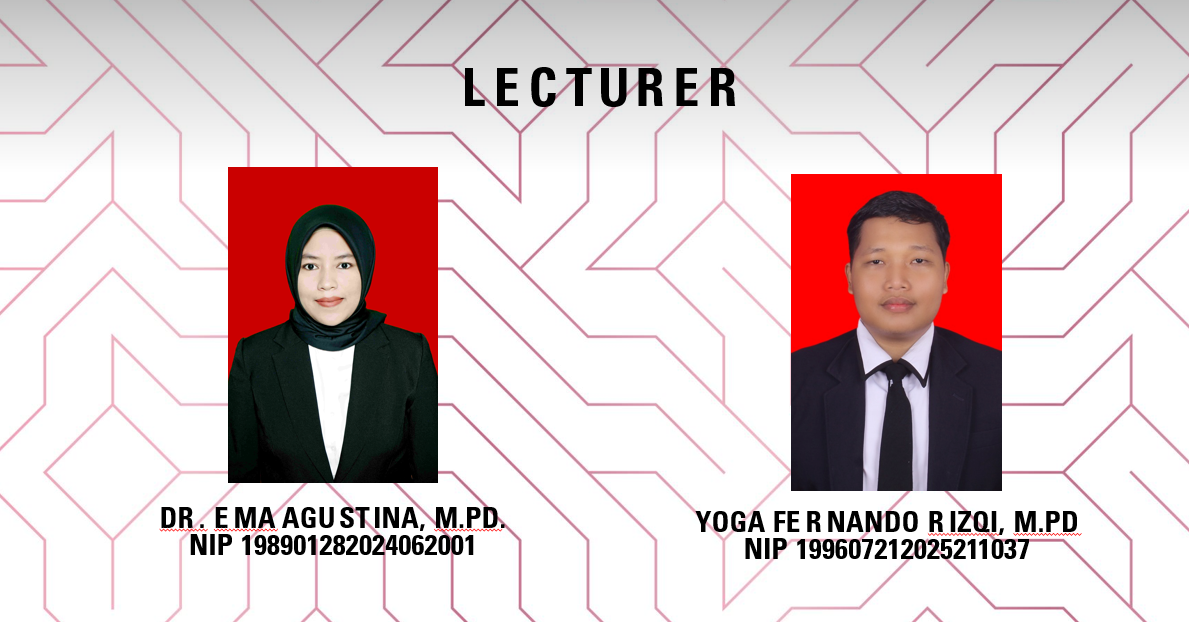
Hello and Welcome to Bahasa Inggris Profesi, a 2-credit course that we will be exploring together this semester. My name is Ema Agustina, and I am delighted to be your lecturer for this course.I am excited to have you all here with me today. As your lecturer, my goal is to help you improve your English skills and prepare you for success in your professional career.
Throughout this course, we will explore a variety of topics related to English for specific purposes, including business English, technical English, and academic English. We will also work on improving your speaking, listening, reading, and writing skills. The purpose of this course is to equip you with the necessary language skills that will be valuable in your future profession. We will focus on practical aspects of the language and communication, such as writing emails, making presentations, and holding meetings. Through this course, you will also improve your vocabulary and grammar skills.
In order to make the most of this class, it is important that you come prepared and engaged in every session. Be ready to participate in class discussions, complete assignments on time, and actively seek out opportunities to practice your English skills.
I encourage you to take advantage of all the resources available to you, including textbooks, online materials, and language learning apps. Additionally, don't hesitate to reach out to me or your classmates if you have any questions or need help along the way. I encourage you to come to class prepared to participate in discussions, engage in activities, and ask questions. This course is designed to help you develop your language proficiency and communication skills, and I look forward to working with each and every one of you to achieve this goal.
Together, we can make this a productive and rewarding learning experience. Let's get started!
1. UNDERSTAND THE TOPICS AND ASSESSMENT CRITERIA
Good morning everyone, and welcome to our first meeting of Bahasa Inggris Profesi course. I am excited to meet all of you, and I look forward to getting to know you and working together throughout this course.
In this course, we will be focusing on developing your English language skills for professional purposes. We will explore various topics, such as business communication, technical writing, academic presentation skills, and much more. The goal of this course is to help you use English effectively in your future profession, whether it be in business, engineering, medicine, or any other field.
We will be using a variety of materials and resources to help you develop your language skills. We will have class discussions, group activities, and presentations to help you practice your speaking and listening skills. We will also work on improving your reading and writing skills through various assignments, such as reports, essays, and case studies.
As a lecturer, I am committed to helping you achieve your language goals. I encourage you to participate actively in class, to complete all assignments on time, and to take advantage of the resources available to you, such as online materials and language learning apps. I am also available to help you with any questions or concerns you may have.
I believe that by the end of this course, you will have a solid foundation in English language skills that you can apply in your future profession. Let's work together to make this a productive and enjoyable learning experience. Thank you, and let's get started!
- Rencana Pembelajaran Semester Bahasa Inggris Profesi File 2.7MB Word 2007 document
- Adrian Wallwork_English for Academic Correspondence and Socializing File 9.9MB PDF document
Students often focus more on earning "points" on the assessment criteria (rubric) than on delving into the essence of the topic itself. In your opinion, do highly detailed grading criteria help you learn more effectively, or do they actually limit your creativity in exploring the material? Provide one example of a situation (based on experience or imagination) where understanding the grading criteria changed the way you approached an assignment.
2. INTRODUCE YOURSELF AND ASK A QUESTION
Introducing yourself is an important skill, whether you are meeting new people in a personal or professional setting. Here are some tips on how to introduce yourself effectively and how to ask questions to get to know others better:
Start with a greeting: Begin by greeting the person you are speaking to. Depending on the situation, you might say "Hello," "Hi," "Good morning," or "Good afternoon."
Introduce yourself: Next, introduce yourself by saying your name and giving a brief description of who you are. For example, "Hi, I'm Jane. I'm a student at XYZ University."
Ask a question: To get the conversation going, ask the other person a question. This can be a general question about themselves or something specific to the situation. For example, "What brings you to this event?" or "How long have you been working in this field?"
Listen actively: Once the other person has started talking, listen actively to what they are saying. Show interest and engagement by nodding your head, making eye contact, and responding with follow-up questions or comments.
Share information about yourself: As the conversation progresses, share more information about yourself. This could be details about your background, interests, or future plans.
Remember, introducing yourself and asking questions is all about making a connection with others. By showing genuine interest and actively listening to what others have to say, you can build meaningful relationships and make a positive impression on those around you.
Buatlah video perkenalan diri dalam bahasa inggris dengan menggunakan salah satu situasi seolah kalian sebagai salah satu dari profesi berikut ini: guru, pemandu wisata, jurnalis, peneliti sejarah, sejarawan dan/atau profesi lainnya. Video 3-5 menit diupload ke youtube dan copy link nya kemudian paste melalui menu ini
Welcome to our first discussion forum! As a first step toward building a strong learning community, please introduce yourself by sharing your name and one unique fact or personal interest that might not be listed in your academic profile. Next, write down one big question on your mind regarding how this course material will impact your future career or current real-world challenges. Don’t forget to read your peers’ introductions and offer a brief response or try answering one of their questions, so that we don’t just get to know each other by name, but also start exploring interesting ideas together from day one.
3. Common phrases and expressions used in the workplace
Effective communication is an essential skill in both personal and professional settings. Here are some useful phrases that you can use in verbal interactions to help you communicate more clearly and effectively:
- Starting a conversation:
- Excuse me, do you have a moment?
- Hi, how are you?
- Good morning/afternoon/evening.
- Asking for clarification:
- Can you repeat that, please?
- I'm sorry, I didn't quite catch that.
- Could you explain that in more detail?
- Giving clarification:
- Let me clarify what I meant.
- What I meant to say was...
- To be more precise...
- Agreeing:
- I agree with you.
- That's a good point.
- You're absolutely right.
- Disagreeing:
- I see your point, but I think...
- I'm not sure I agree with you.
- I have a different perspective.
- Asking for opinions:
- What's your opinion on this?
- How do you feel about this?
- What do you think we should do?
- Giving opinions:
- In my opinion...
- From my point of view...
- Personally, I think...
- Requesting information:
- Could you tell me more about that?
- Can you give me more information on this topic?
- I'm interested in learning more about this.
- Closing a conversation:
- It was great talking to you.
- Thank you for your time.
- Let's keep in touch.
Remember, the way you communicate can greatly impact how you are perceived by others. Using polite and respectful language is always important, especially in professional settings. By using these useful phrases, you can improve your communication skills and build better relationships with those around you.
In the workplace, we often hear terms like "circle back," "touch base," or "think outside the box," which can sometimes sound like a secret language to those just starting their careers. For this discussion, please identify one professional phrase or expression (in either English or Indonesian) commonly used in an office setting, then explain its meaning in context and provide a brief example of a conversation scenario where the phrase is used. Additionally, share your honest opinion: does the use of jargon or specialized expressions like these actually help improve communication efficiency among coworkers, or does it risk creating barriers for new employees who aren’t yet familiar with the office culture? Let’s explore together which expressions are truly functional and which are merely “flavor” in professional communication.
4-6 PRESENT A TOPIC
Presenting a topic can be nerve-wracking, but it's an essential skill for both personal and professional settings. Here are some tips on how to present a topic effectively:
Start with an attention-grabbing introduction: Begin by introducing yourself and the topic you will be presenting. Try to capture the audience's attention with an interesting fact or anecdote related to your topic.
Provide context: Provide some background information on the topic and why it is relevant to your audience. This can help your audience better understand and appreciate your presentation.
Organize your content: Organize your presentation in a logical and easy-to-follow manner. This can include outlining key points or using visual aids such as slides or diagrams to help convey your message.
Engage the audience: Engage your audience throughout your presentation by asking questions, using humor, and encouraging participation. This can help keep your audience interested and invested in your presentation.
Provide a conclusion: Summarize the key points of your presentation and offer some concluding thoughts. This can help reinforce your message and leave a lasting impression on your audience.
Remember, the key to presenting a topic effectively is to be well-prepared and confident in your delivery. Practice your presentation beforehand and try to anticipate any potential questions or challenges from your audience. With these tips, you can deliver a successful and engaging presentation.
- Project "Present a Topic" File 14.5KB Word 2007 document
Presenting a topic is often a nerve-wracking experience, even when we’ve mastered the technical aspects, such as engaging opening techniques or ways to involve the audience. Based on the material above, which of the five presentation elements (opening, context, organization, engagement, or conclusion) do you find most difficult to execute when nervousness strikes, and what is the biggest challenge for you? Additionally, please share one “emergency” strategy you typically use to stay calm and professional when you suddenly lose your train of thought in front of an audience. Let’s discuss how to turn anxiety into a confident performance!
7. WRITE AN EMAIL AND COMMERCIAL CORRESPONDENCE
Writing emails and commercial correspondence is an essential skill for many professionals. Here are some tips to help you write effective emails and commercial correspondence:
Keep it brief and to the point: Keep your email or correspondence concise and focused on the main purpose. Avoid including unnecessary information or going off-topic.
Use a clear subject line: Your subject line should accurately reflect the content of your email or correspondence, and help the recipient understand the purpose of your message.
Start with a professional greeting: Use a professional greeting such as "Dear [Name]" or "To Whom It May Concern" to start your email or correspondence.
Use proper grammar and spelling: Use proper grammar and spelling to ensure that your message is clear and professional. Use a spell checker if needed.
Be polite and respectful: Use polite and respectful language in your email or correspondence, and avoid using offensive or derogatory language.
Provide all necessary information: Make sure that you provide all the necessary information in your email or correspondence, including contact details and any important dates or deadlines.
Use a professional closing: Use a professional closing such as "Sincerely" or "Best regards" to end your email or correspondence.
Proofread before sending: Proofread your email or correspondence before sending it, to make sure that there are no errors or mistakes.
Remember, writing effective emails and commercial correspondence is an important skill that can help you communicate effectively with your colleagues, clients, and customers. By following these tips, you can improve your writing skills and make a strong impression in your professional communications.
copy and paste YouTube link here
Writing business emails is often a challenge because we must strike a balance between professionalism, clarity of purpose, and politeness without coming across as rambling. In this discussion forum, please analyze a scenario in which you must send a follow-up email to a potential business partner who has not responded to your proposal for a week. In your opinion, how can you craft a message that remains firm and conveys urgency, yet still adheres to the etiquette of business correspondence so as not to come across as pushy or impolite? Write an example of an email subject line and opening sentence that you believe would be most effective for this situation, and explain why the choice of words in the subject line is crucial in determining whether your email will be opened or ignored by the recipient.
8. MIDTERM EXAM
Good morning/afternoon/evening, class!
As we approach the midpoint of the semester, it is time for us to take stock of our progress so far and prepare for the upcoming midterm exams. This can be a challenging time for many students, as we balance our academic commitments with other responsibilities in our lives.
But I am confident that each and every one of you is capable of achieving success on these exams. Throughout the semester, we have covered a lot of material, and you have all shown a dedication and commitment to your studies.
Over the next few weeks, we will be reviewing key concepts and topics, and preparing for the exams with the goal of achieving our best possible results. I encourage you to approach this process with a positive attitude, an open mind, and a willingness to learn.
Remember, your success is not only measured by your exam scores, but by your growth and development as a student and a person. Let us work together to support and encourage one another, and strive for excellence in all that we do.
Thank you, and let's begin our midterm exam preparations with enthusiasm and determination!
Copy and Paste your YouTube link here
9. WRITE AN EMAIL AND COMMERCIAL CORRESPONDENCE
Silakan klik untuk bergabung dalam Virtual Meeting perkkuliahan minggu ini
10. WRITE AN EMAIL AND COMMERCIAL CORRESPONDENCE
Silakan klik untuk bergabung dalam Virtual Meeting perkkuliahan minggu ini
11. WRITE AN ABSTRACT/A RESEARCH PAPER
Silakan klik untuk bergabung dalam Virtual Meeting perkkuliahan minggu ini
Writing an abstract is often considered the most difficult part because we must condense complex research into a very limited number of words, usually no more than 250. In this discussion forum, please analyze: In your opinion, which approach is more effective in an abstract—focusing on detailed methodology to demonstrate the research’s validity, or devoting more space to results and implications to capture the reader’s interest? Additionally, if you had to cut 50 words from an abstract already considered “perfect,” which elements of information would you sacrifice first without compromising the essence of the research? Let’s discuss strategies for crafting a concise “showcase” of research that still possesses strong academic appeal.
12. WRITE AN ABSTRACT/A RESEARCH PAPER
An abstract is a brief summary of a research paper, thesis, review article, conference proceeding, or any in-depth analysis of a particular subject and is often used to help the reader quickly ascertain the paper's purpose. When used, an abstract always appears at the beginning of a manuscript or typescript, acting as the point-of-entry for any given academic paper or patent application.
Abstracts:
An abstract is a brief summary of a research paper, thesis, or article. It is usually between 150-250 words in length and should provide a concise overview of the study or research.
The abstract should include the purpose of the research, the methods used, the main findings or results, and the conclusion or implications of the research.
The abstract should be written in a clear and concise manner, using plain language that is easy to understand. It should also be free of jargon, acronyms, and technical terms.
The abstract should be the first section of the research paper, but it should be written last, after the rest of the paper has been completed. This ensures that the abstract accurately reflects the content of the paper.
A research paper is a written document that presents the results of a study or research project. It is a formal document that is usually required in academic or professional settings. The purpose of a research paper is to present and analyze information gathered from primary and/or secondary sources on a particular topic, and to present the writer's own interpretation and analysis of that information.
A typical research paper includes an introduction, a literature review, a methods section, a results section, a discussion section, and a conclusion. The introduction provides background information and context for the research, the literature review summarizes previous research on the topic, the methods section explains how the research was conducted, the results section presents the findings of the research, the discussion section interprets the results and explains their implications, and the conclusion summarizes the key findings and suggests future research directions.
When writing a research paper, it is important to use accurate and concise language, properly cite all sources, and follow the formatting guidelines specified by the instructor or publisher.
Silakan klik untuk bergabung dalam Virtual Meeting perkkuliahan minggu ini
Write your abstract here, your abstract must include overview of the study (Research Problem, Amis and Objective), methods/research methodology, results/findings, and conclusion/recommendations. Your abstract max. 300 words.
13. REPORT AN EVENT/ISSUE
Silakan klik untuk bergabung dalam Virtual Meeting perkkuliahan minggu ini
submit your assignment here
Reporting an event or issue requires a keen eye for selecting facts so that the report remains objective yet engaging. In this discussion forum, please analyze: How can a reporter maintain neutrality when covering an issue that is highly controversial or emotionally charged for the public? In your opinion, which is more important in a report: presenting a highly detailed chronological sequence, or highlighting the main impact of the event on the audience? Also share one example of a phrase or sentence structure that you believe is most effective for conveying important information clearly without appearing biased, and explain why the choice of angle is crucial to the report’s success in educating readers or listeners.
14. WRITE A CV
Silakan klik untuk bergabung dalam Virtual Meeting perkkuliahan minggu ini
- Writing effective CV File 1.6MB Powerpoint 2007 presentation
15. HAVE AN INTERVIEW
Silakan klik untuk bergabung dalam Virtual Meeting perkkuliahan minggu ini
16. FINAL EXAM
Good morning/afternoon/evening, class!
As we approach the end of the semester, it is time for us to reflect on all that we have learned and achieved throughout the course. It has been a challenging and rewarding journey, filled with hard work, dedication, and growth.
Today, we come together for the final exam, which is the culmination of all that we have learned and experienced. This is an opportunity to demonstrate the knowledge, skills, and abilities that we have developed over the course of the semester.
I want to take a moment to acknowledge all of your hard work and effort. Throughout the semester, you have shown a commitment to your studies and a willingness to push yourselves beyond your comfort zones. You have asked thoughtful questions, engaged in lively discussions, and demonstrated a passion for learning.
I know that this final exam can be stressful and intimidating, but I have faith in each and every one of you. You have the knowledge, skills, and experience to succeed, and I am confident that you will perform at your best.
So let us approach this final exam with confidence, determination, and a sense of pride in all that we have accomplished. We have worked hard and we are ready to succeed.
Thank you, and let us begin this final exam with enthusiasm and positivity!
- Tugas Projek Penganti UAS Bahasa Inggris Profesi File 107.5KB PDF document